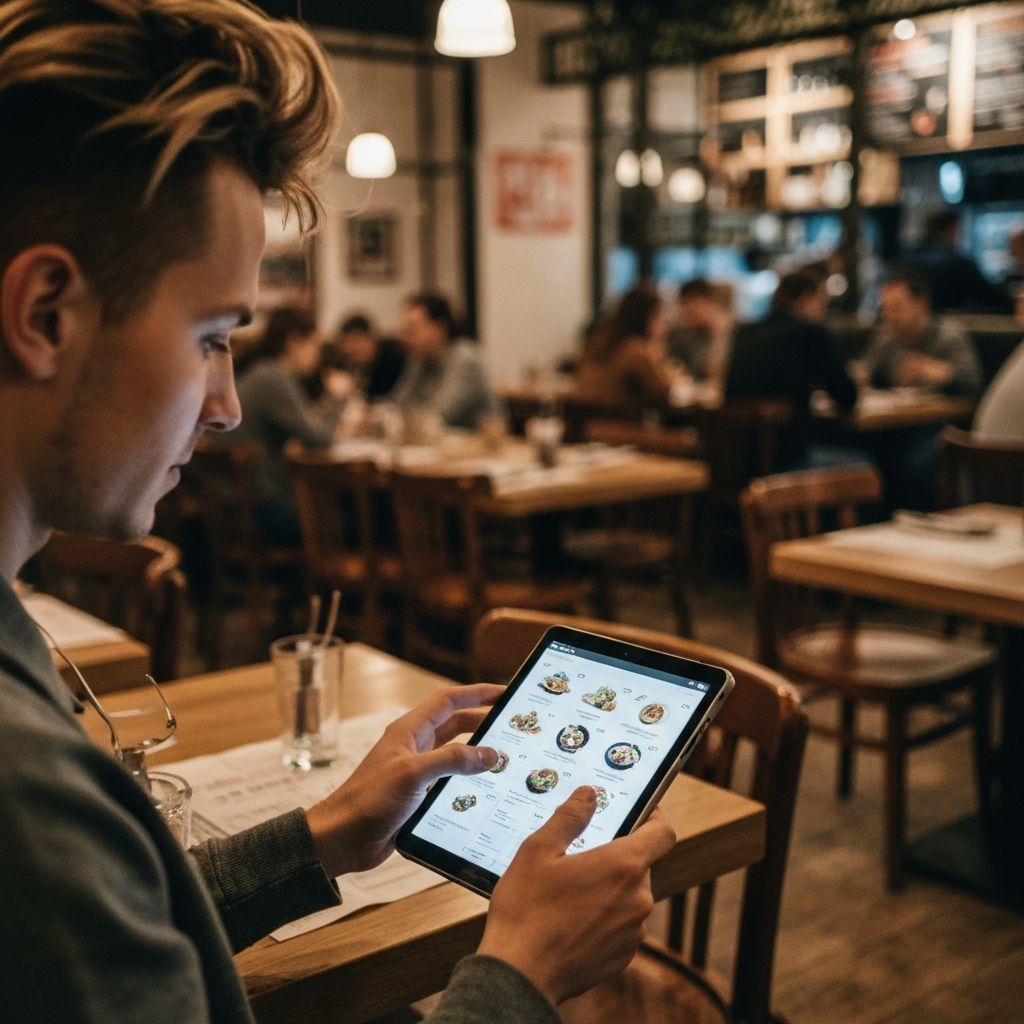
The pandemic accelerated digital adoption in restaurants by years, and there's no going back. QR-code menus, contactless ordering, and digital payment have become standard expectations rather than novelty features.
According to industry data, 73% of restaurant operators increased technology investments in 2024, with customer experience enhancement as a primary goal. The results are visible everywhere: kiosks in quick-service restaurants, tablets on casual dining tables, and mobile apps that remember preferences and streamline reordering.
The benefits extend beyond convenience. Digital ordering systems can increase average check sizes through strategic upselling and cross-selling. They reduce order errors by eliminating miscommunication. And they free staff from order-taking duties, allowing more focus on hospitality and food quality.
For customers, visual menus with high-quality photos and detailed descriptions drive confident decisions. Customization options are easier to navigate digitally than to communicate verbally. And for those with dietary restrictions or preferences, filtering and highlighting relevant options improves the experience dramatically.
Behind the scenes, digital ordering generates valuable data. Which items sell best together? What times see peak demand? How do weather or local events affect ordering patterns? This intelligence enables better menu engineering, more accurate staffing, and smarter inventory management.
Of course, digital shouldn't mean impersonal. The best restaurants use technology to enhance human interaction, not replace it. Staff freed from transactional tasks can focus on welcoming guests, checking on tables, and creating memorable moments.
The restaurants succeeding in this new landscape view digital ordering as one component of a comprehensive experience strategy—not a standalone solution, but an integrated element of their hospitality approach.